
*Pet Safety Note*
There's really no separating my love of plants and my love for pets. Because of this, I am careful about what I grow and use in my designs; my pets have access to my design studio, plus I don’t want any cat or dog to become ill from something I created. That being said, it is the responsibility of the pet owner to verify that what they bring into their house is safe to be around their pets.
The decision about what we grow and use is based on multiple veterinary references and considers several important factors, including:
The likelihood of ingestion (for example, whether a plant has a bitter taste or a texture/scent pets are typically not attracted to — though this does not apply to puppies or kittens, who tend to explore indiscriminately)
Where the plant will be displayed (outdoors with no pet access, elevated, or mounted on a wall)
The severity of symptoms if ingested
The amount of plant material required to cause toxicity
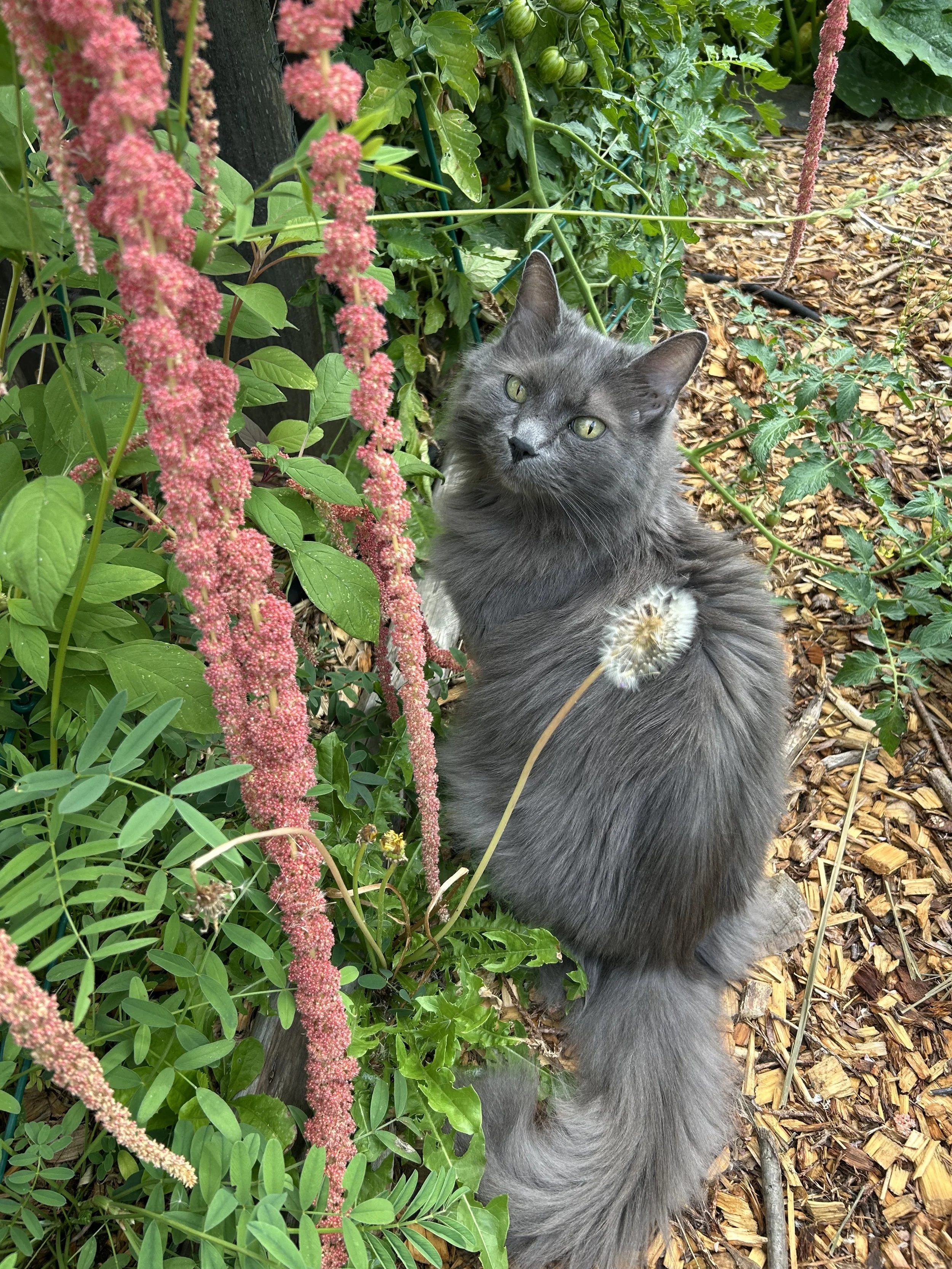
As the adage says, “The dose makes the poison.” However, the following plants are ones I do not use, as even very small amounts can cause life-threatening illness in cats or dogs:
True lilies (Lilium species) — including Asiatic, Oriental, Tiger, Easter, and Stargazer lilies — are fatally toxic to cats. Even drinking water from a vase that held lilies or licking pollen from fur can result in acute kidney injury, kidney failure, or death. Most documented cases involve cats; however, dogs are also believed to be affected and may experience vomiting and diarrhea.
Daylilies (Hemerocallis genus) — Highly toxic to cats and capable of causing the same severe kidney injury seen with true lilies.
Sago palms — Extremely toxic to both dogs and cats. All parts of the plant are poisonous and can be fatal without immediate treatment.
Azaleas/Rhododendrons (not typically used in cut designs but worth noting) — All parts of the plant are toxic to cats and dogs. Symptoms often begin rapidly with vomiting and diarrhea and can progress to cardiovascular changes (abnormal heart rate) and neurological signs such as weakness or seizures.
Any plant material that could become a “foreign body,” either orally or dermally, such as certain grass seed heads.

This information is not meant to alarm, but to inform and help prevent accidental exposure. If you are ever unsure whether a plant is safe for your pet, please consult your veterinarian. If toxin exposure is suspected, it is imperative to contact one of the following resources immediately:
Pet Poison Helpline: 855-764-7661
ASPCA Poison Control: (888) 426-4435
Please note: Just because a plant is considered “non-toxic” to cats or dogs does not mean it cannot cause gastrointestinal upset (such as vomiting or diarrhea). Any sudden dietary change or ingestion of plant material may result in GI symptoms. “Non-toxic” simply means it is not known to cause organ damage or long-term health effects. Puppies and kittens, who explore their world by tasting everything, are at higher risk of toxic exposure.